
Imagine you are in the middle of a high-stakes presentation or stuck in a sweltering traffic jam in Mumbai. Suddenly, your chest tightens, your breath becomes shallow, and your mind begins to spiral.
This is acute anxiety, and while it feels like an emotional storm, it is actually a physical hijack of your nervous system. The fastest way to regain control isn’t through “thinking positive”—it is through the physical act of changing how you breathe. Breathing exercises for acute anxiety relief act as a manual override for your brain’s alarm system.
The Science of the “Panic Button”
Let’s look at the science: When anxiety hits, your Sympathetic Nervous System (the “fight or flight” mode) takes over. Your body floods with adrenaline and cortisol, preparing you to run from a perceived predator.
By consciously slowing your breath, you stimulate the Vagus Nerve. This nerve is the highway of your Parasympathetic Nervous System (the “rest and digest” mode). When you engage this nerve through specific breathing exercises for acute anxiety relief, you send a chemical signal to your brain that the danger has passed. It is the most effective form of biological preventative care you can perform in real-time.
4 Essential Breathing Techniques for Instant Calm
In my experience, having a “menu” of techniques is vital because different people respond to different rhythms. Try these four methods to see which one anchors you best.
1. The Physiological Sigh (The “Quick Fix”)
Recently popularized by neuroscientists, this is perhaps the fastest way to offload carbon dioxide and lower your heart rate.
- How to do it: Inhale deeply through your nose. At the very top, take a second, shorter “sharp” inhale to fully inflate the tiny air sacs in your lungs.
- The Release: Exhale slowly through your mouth until your lungs are completely empty. Repeat 2–3 times.
2. Box Breathing (The “Navy SEAL” Method)
Used by elite athletes and tactical professionals to stay cool under pressure, this technique promotes mental clarity and metabolic health by stabilizing blood oxygen levels.
- Inhale: Breathe in through your nose for a count of 4.
- Hold: Retain the air for a count of 4.
- Exhale: Release slowly through your mouth for a count of 4.
- Hold: Stay empty for a count of 4.
3. 4-7-8 Breathing (The “Natural Tranquilizer”)
This is a staple for any solid wellness routine, especially before bed.
- Inhale for 4 seconds.
- Hold your breath for 7 seconds.
- Exhale forcefully through your mouth with a “whoosh” sound for 8 seconds.
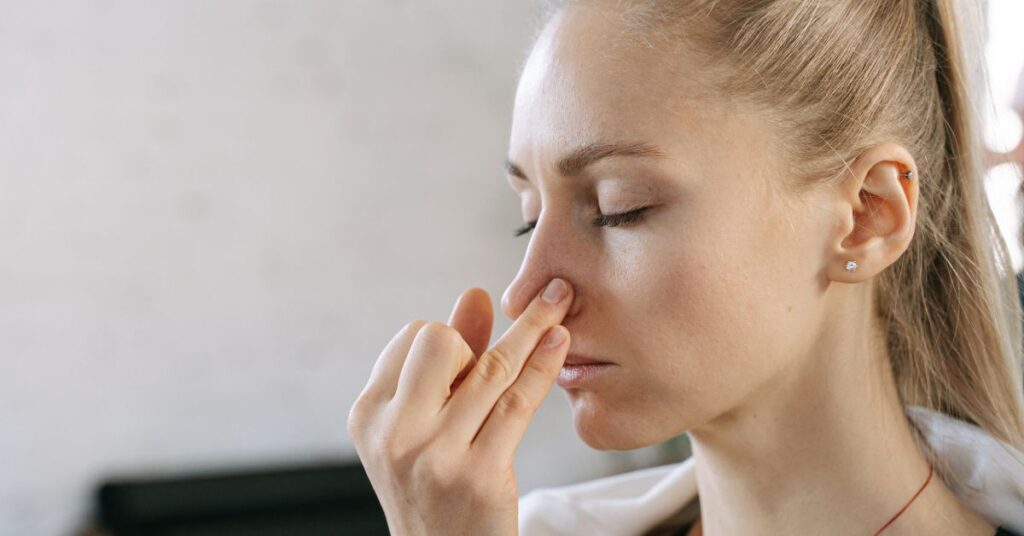
4. Alternative Nostril Breathing (Nadi Shodhana)
A cornerstone of traditional Indian wellness, this balances the left and right hemispheres of the brain.
- Use your thumb to close your right nostril and inhale through the left.
- Close the left nostril with your ring finger and exhale through the right.
- Inhale through the right, then switch to exhale through the left.
Why Breathing Matters for Your Long-Term Health
We often think of breathing as “just air,” but it is deeply connected to your metabolic health. Shallow, “chest breathing” keeps the body in a state of chronic low-level stress. This increases systemic inflammation and can interfere with your body’s ability to regulate glucose and repair tissues.
Integrating breathing exercises for acute anxiety relief into your daily life—not just when you are panicking—functions as a form of “toning” for your nervous system.
Relatable Scenario: The “Before and After”
- The Before: You receive a stressful WhatsApp message. Your breath stays in your upper chest. Your heart rate climbs to 100 BPM. You snap at your spouse or colleague and feel drained for the next three hours.
- The After: You receive the message. You immediately perform three Physiological Sighs. Your heart rate stabilizes. You respond to the message with logic rather than emotion. Your wellness routine remains intact.
Question for you: During your busy workday, how many times do you find yourself holding your breath without realizing it?
Practical Tips for Success
To make these exercises work when you truly need them, keep these tips in mind:
- Focus on the Exhale: The exhale is what triggers the relaxation response. Always try to make your exhale longer than your inhale.
- Diaphragmatic Breathing: Place one hand on your belly. As you breathe in, your hand should move out. If only your shoulders are moving, you aren’t reaching the “calm zone” of your lungs.
- Practice in Peace: Don’t wait for a panic attack to try these for the first time. Practice for 2 minutes every morning as part of your preventative care.
The 5-Minute “Oxygen Reset” Challenge
I challenge you to try this right now, wherever you are sitting:
- Set a timer for 5 minutes.
- Choose the Box Breathing method (4-4-4-4).
- Close your eyes or soften your gaze.
- The Goal: Focus entirely on the sensation of the air entering your nostrils and leaving your lips.
If your mind wanders, gently bring it back to the count. Notice how your shoulders drop and your jaw relaxes by the time the timer dings.
Conclusion
You always have a tool for peace right under your nose. Breathing exercises for acute anxiety relief are free, require no equipment, and work instantly. By mastering your breath, you aren’t just stopping a panic attack; you are building a foundation for a more resilient, healthier version of yourself.
Health Challenge: Tomorrow morning, before you check your phone, perform 5 rounds of the 4-7-8 breath. Notice if it changes the “vibe” of your entire morning.